We’re big fans of light and sound projects and have been working with lamps, LEDs, and interesting lighting for years. Two relatively recent developments in the world of awesome lighting fixtures accelerated our development, especially for integrations with our video streams: addressable LEDs and and the WLED project (https://kno.wled.ge/). We integrate our in-studio LEDs with our chatbot, HTPbot, so that the lighting during live streams can be controlled by the chat or Twitch events like channel points reward redemption, subscriptions, or similar events.
We’re love Adafruit’s Neopixel and the FastLED libraries for working with WS2812b LEDs where we need to control the LEDs in very specific ways, like Flippin Rhobot to the right.
We use WLED when putting in general lighting installations, like the LED arrays seen on Hack The Planet Twitch streams, because it’s so easy to get up and running in a short time. While programming Flippin Rhobot is fun, getting a matrix of lights functional in minutes really satisfying, and allows us to focus on the physical build instead of the software.
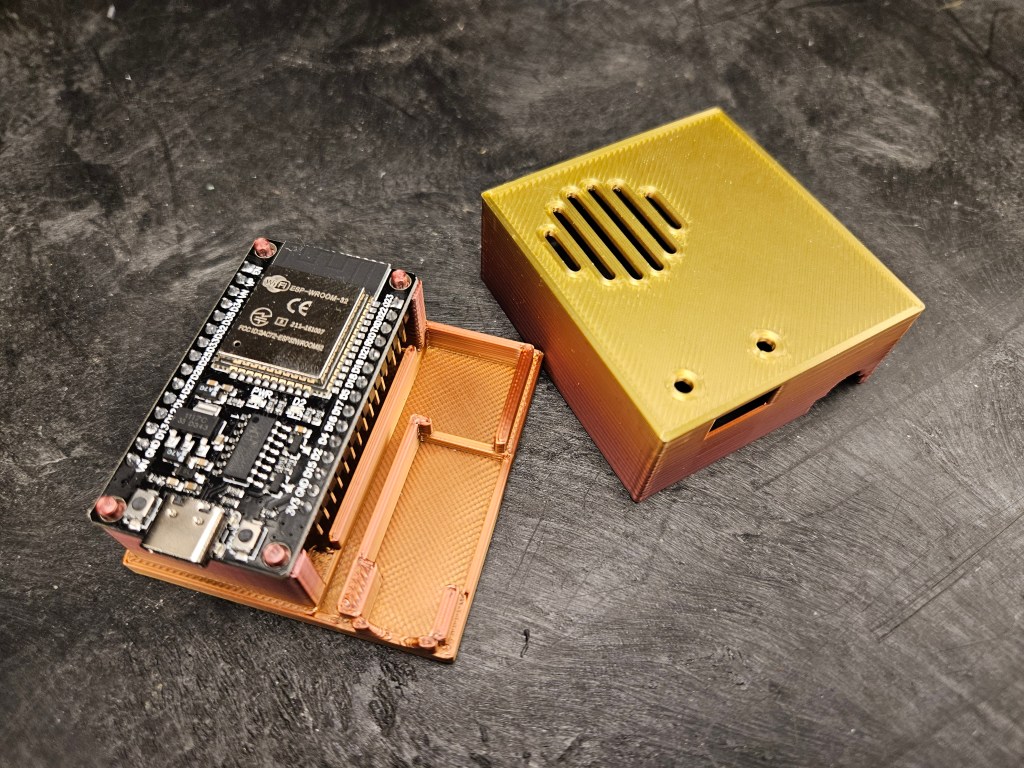
We developed a small 3D-printed enclosure that holds an ESP32, power jack, capacitor, and output cable for addressable LED strips. We mostly use WS2812B strips for our LED strings and generic ESP32 modules with WLED loaded from their online installer. They are synced up with our chatbots so online users can change the lights on the fly by selecting WLED presets that we either configured via json files or in the WLED app.
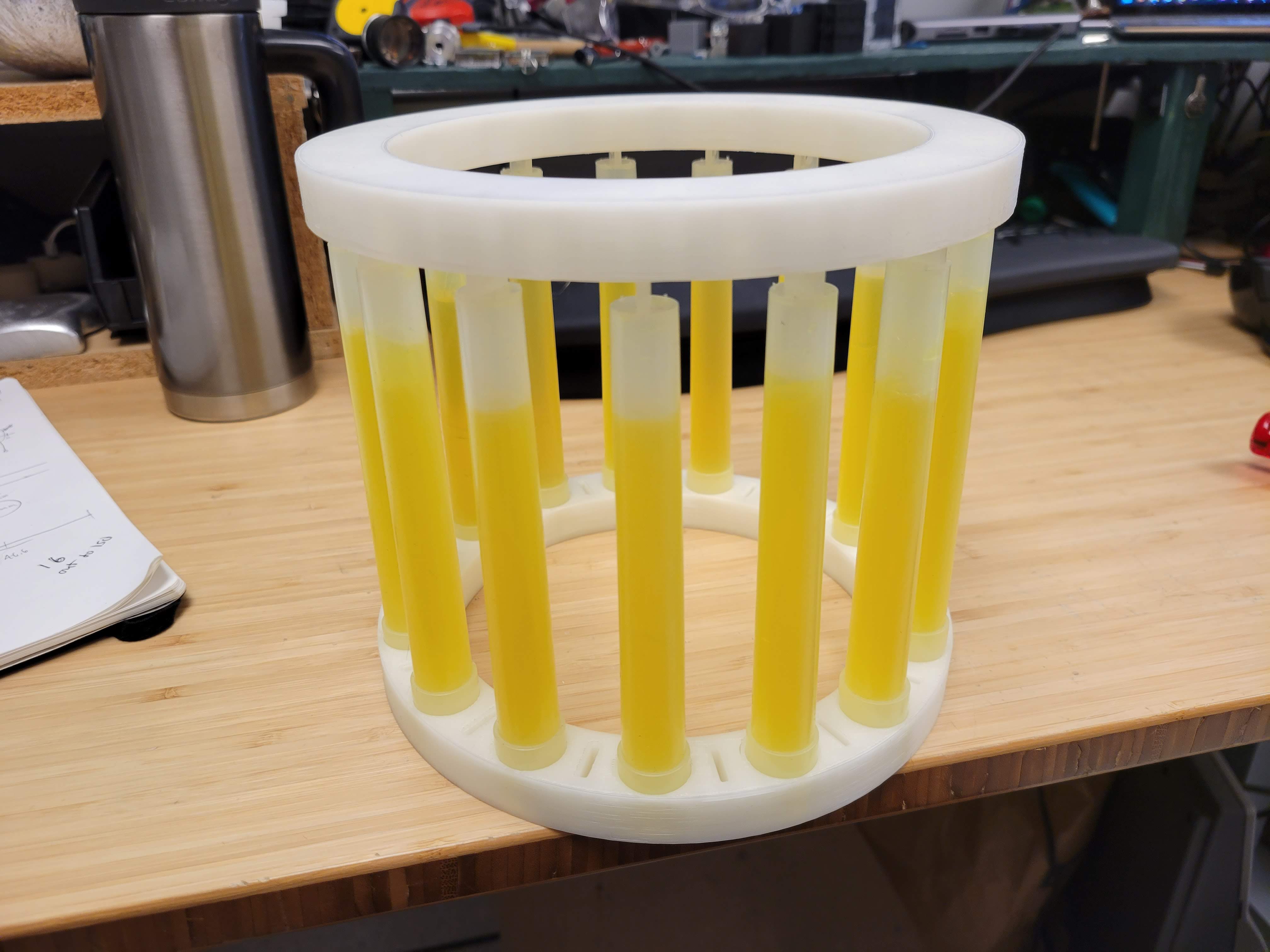
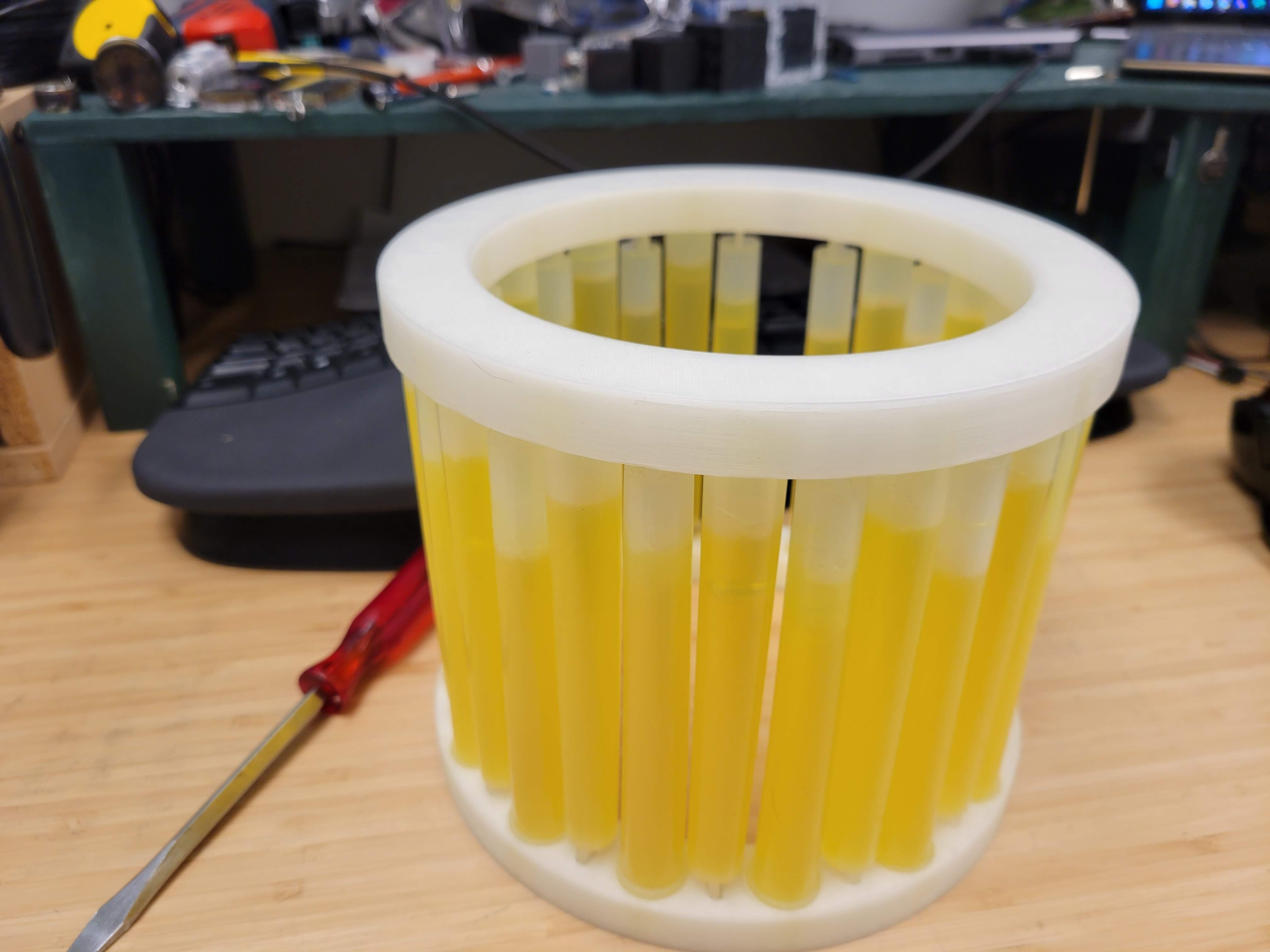


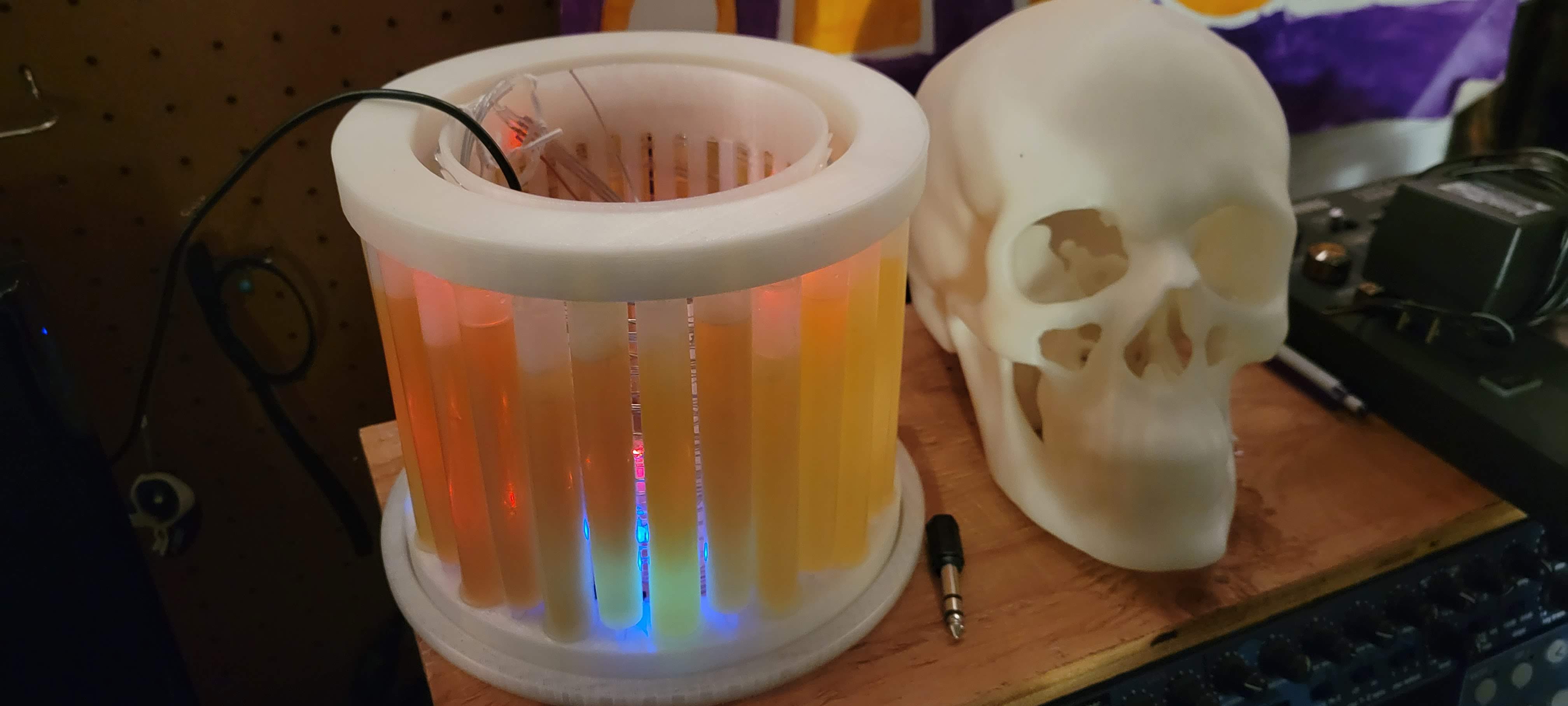
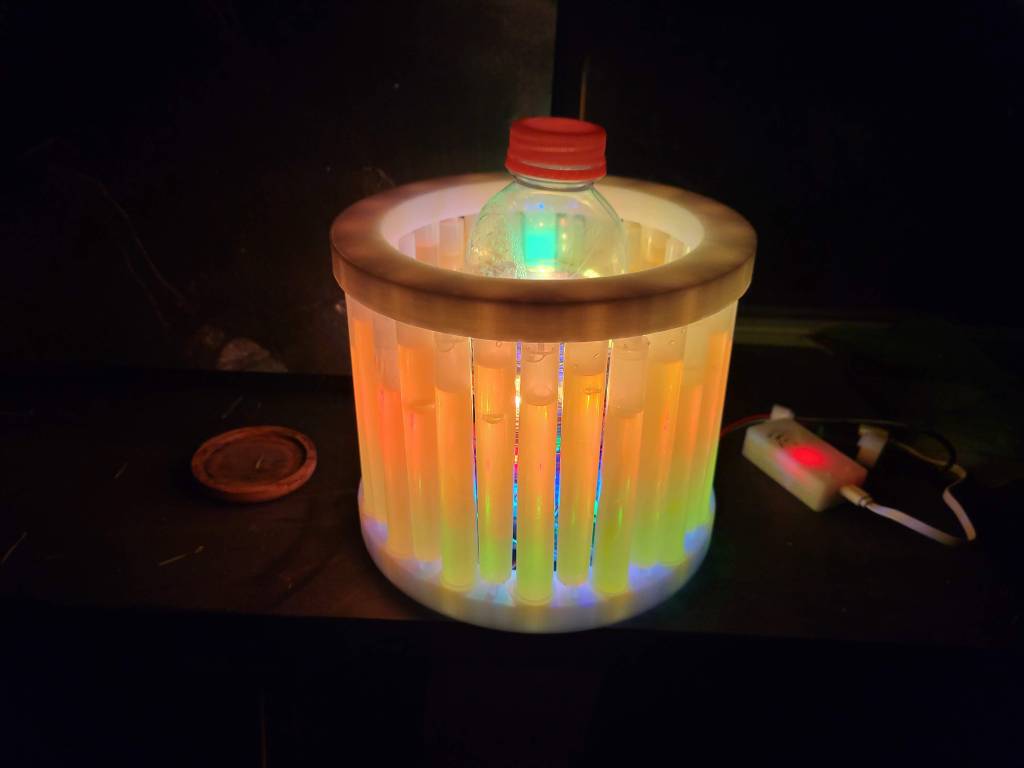
We also love glowsticks! Instead of throwing them away after they stop glowing, we save them for future projects. In this WLED installation we used a bunch of glowsticks held in place by two 3D-printed rings. Then we inserted LED fairy lights and set them to glow. Our favorite mode is the one shown at right with the random ‘firefly’ effect.
This cylinder of lights is a couple of addressable fairy light strips suspended around a PVC tube. Each vertical run of lights is its own segment in WLED, which makes it kind of like a round matrix. The top and bottom are 3D printed, and are held in place by the light strings.

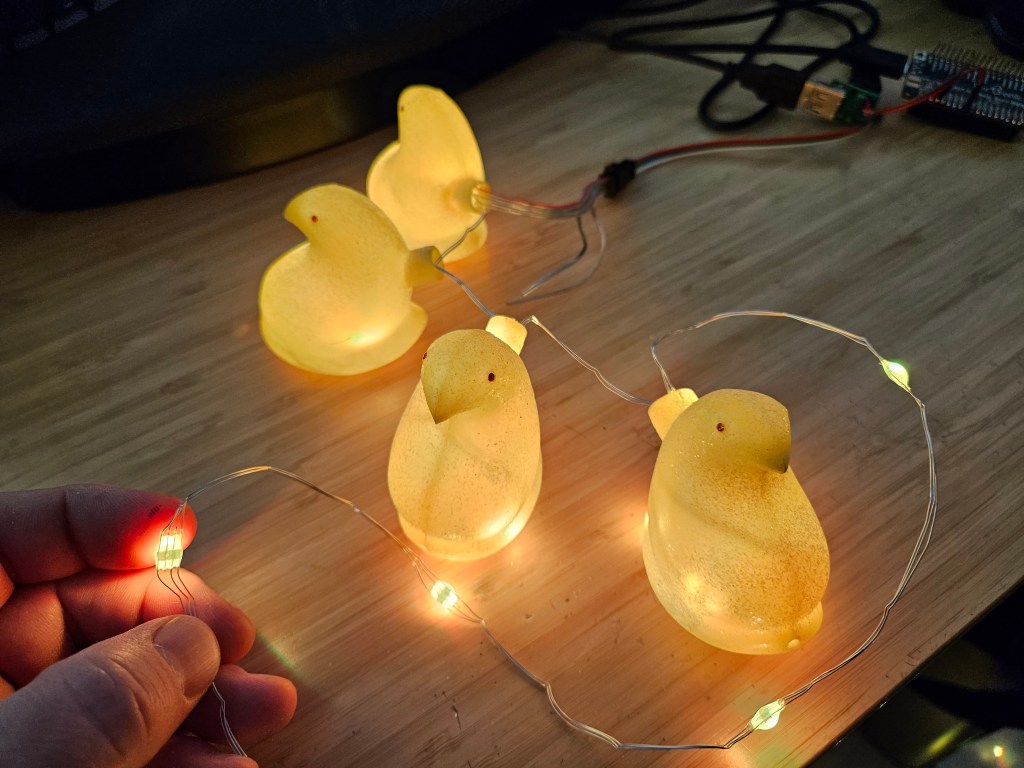
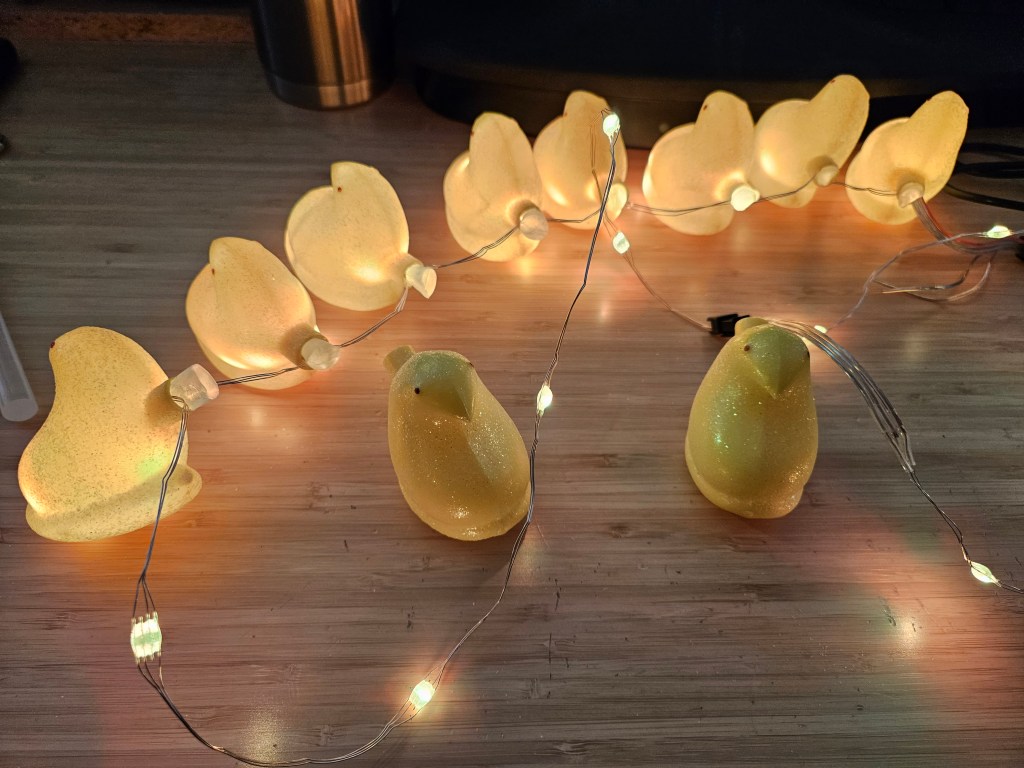
Peeps are great. Peeps lights are the best of two worlds – Peeps and lights!
These were originally illuminated by incandescent lights in series. When one light burned out we seized the opportunity to replace them with addressable LEDs, which we stuffed in the back of each Peeps and corked the hole with a glue stick. Again, we used WLED and integrated them into HTP’s video stream. In most views, these are off camera, so that I get to enjoy them by myself.
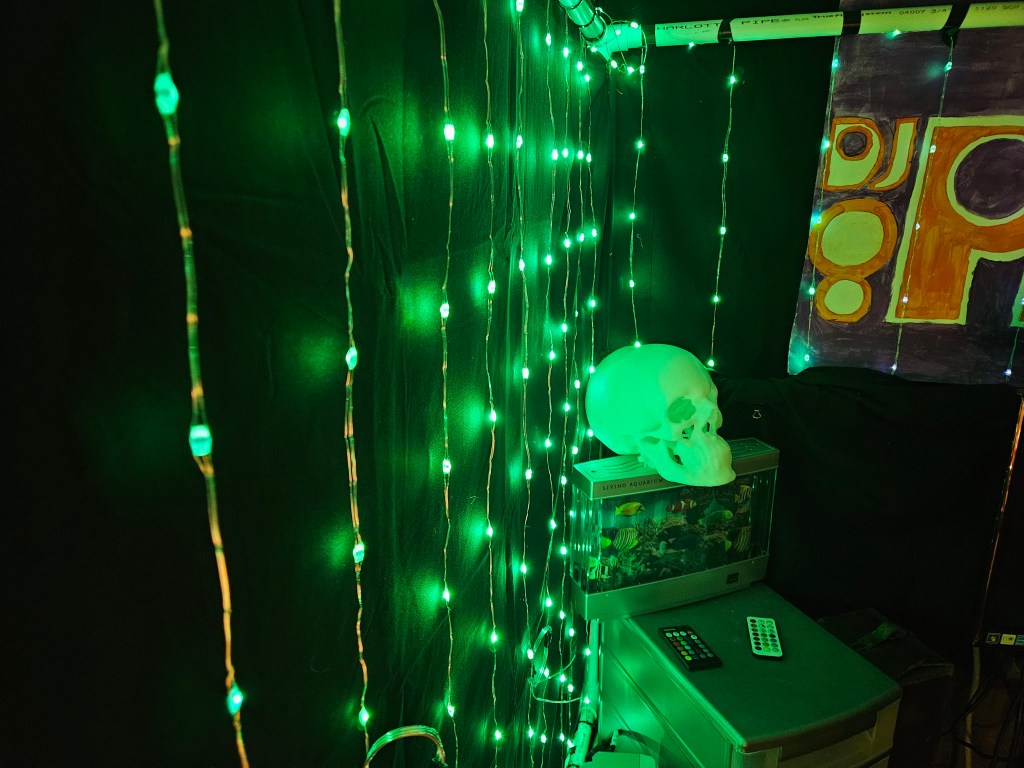
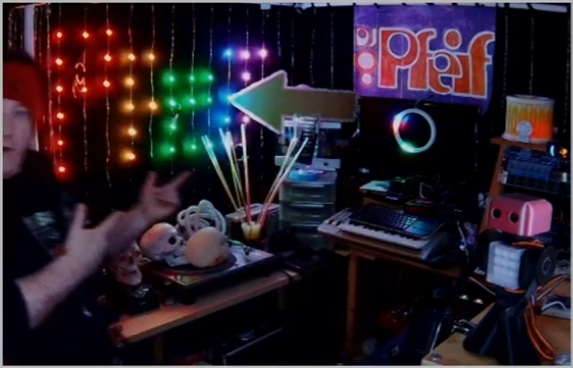
The largest of our LED installations is the matrix of fairy lights setup behind me during Hack The Planet’s video streams. It is composed of several strings of addressable fairy lights suspended between a frame of PVC tubing spanning two walls. One of the cool parts of WLED is being able to address each individual LED via a json file. This allows us to display stuff on the matrix like pixelated emojis or text like “Pfeif” as seen in the screengrab at right. Most of the time, this displays cool lighting patterns designed by our in-house development team.
 DJ Pfeif
Leave a comment